What is Arthroscopy? A Simple Guide to This Modern Surgery

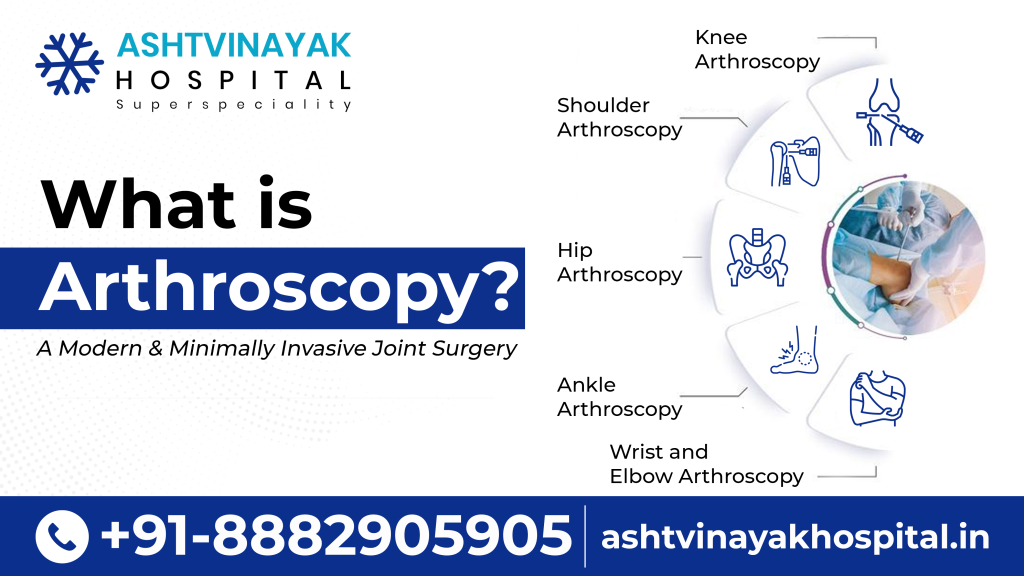
What is Arthroscopy? A Simple Guide to This Modern Surgery Book An Appointment TABLE OF CONTENTS What is Arthroscopy? A Simple Guide to This Modern Surgery Types of Arthroscopy Risks or Complications of Arthroscopy Advantages of Arthroscopy What Happens During an Arthroscopy Procedure? Recovery After Arthroscopy A less invasive surgical technique for examining joints is called an arthroscopy. An arthroscope is a tiny camera that doctors use to inspect, diagnose, and treat joint issues.The Greek words “skopein” (to look) and “arthro” (joint) are the origin of the term. It is often used for joints like the knee, shoulder, elbow, ankle, hip, and wrist. Because it uses small cuts, it causes less pain, less scarring, and has a faster recovery time than traditional surgery. Types of Arthroscopy Different joints in the body may require arthroscopy. Here are the main types: 1. Knee Arthroscopy This is the most common type. It is used to treat ACL injuries, meniscus tears, damaged cartilage, and loose bone fragments. 2. Shoulder Arthroscopy Used to treat rotator cuff tears, shoulder instability, and remove inflamed tissue causing pain or stiffness. 3. Hip Arthroscopy Doctors perform this to treat labral tears, hip impingement, or remove loose cartilage. 4. Ankle Arthroscopy It helps in diagnosing and treating ankle fractures, inflammation, and joint debris. 5. Wrist and Elbow Arthroscopy These are less common but useful for ligament injuries, joint pain, or removing loose tissue. Each type of arthroscopy is tailored for that specific joint and its movement. Risks or Complications of Arthroscopy Although arthroscopy is considered safe and low-risk, like all surgeries, it can have complications. The risks are rare but possible. Common Risks Include: Infection at the incision site Bleeding or blood clots Swelling or stiffness in the joint Nerve or tissue damage (very rare) Allergic reaction to anesthesia Your doctor will talk about these risks before the surgery and guide you on how to avoid them. Advantages of Arthroscopy Arthroscopy is superior to open surgery in several ways. 1. Minimally Invasive Smaller incisions heal more quickly and cause less discomfort. 2. Quick Recovery Most people recover in a few weeks, not months. 3. Fewer Scars Because of the small cuts, scarring is minimal. 4. Less Hospital Stay You can return home the same day, as it is frequently an outpatient treatment. 5. Accurate Diagnosis Doctors can see the joint clearly and treat the problem at the same time. These benefits make arthroscopy a preferred choice for both doctors and patients. What Happens During an Arthroscopy Procedure? Let’s walk through a simple explanation of the process. Step 1: Before the Surgery You’ll be asked to fast (not eat or drink) for several hours. An anesthesia is given (general or local) so you don’t feel pain Step 2: During the Surgery Near the joint, a small incision is created. The doctor inserts the arthroscope (a thin tube with a camera). A screen shows images taken from inside the joint. Other small tools are used to repair, clean, or remove damaged tissues. The wounds are closed with stitches or bandages. Let’s walk through a simple explanation of the process. Recovery After Arthroscopy First Few Days: It’s typical to have moderate pain or edema. Doctors will give pain relief medicine. You will be asked to rest and keep the joint elevated. Physical Therapy: Most people need physical therapy to restore their strength and mobility. You’ll be given gentle exercises to do at home or in sessions. Returning to Normal Life: You can go back to light work or school in a few days to a week Sports or heavy activities may take 4 to 6 weeks, depending on the joint. Always follow your doctor’s advice for the safest and fastest recovery Conclusion An innovative, safe, and effective method of treating joint problems is arthroscopy. With fewer cuts and a faster recovery, it is becoming a popular choice for both young athletes and older adults. Whether it’s knee pain, shoulder stiffness, or hip discomfort, arthroscopy offers relief with less pain and more comfort. If you or your loved one is advised to undergo arthroscopy, don’t worry—it’s one of the least invasive surgical options available today. FAQs Is Arthroscopy Procedure Painful? Arthroscopy is done under anesthesia, so you won’t feel any pain during the surgery. Afterward, you might feel a little sore or stiff, but doctors will give you painkillers to manage it easily. Who Needs Arthroscopy? People with joint pain, stiffness, swelling, or injuries that don’t improve with medicine or therapy might need arthroscopy. It is commonly suggested for athletes, arthritis patients, or those with injured ligaments or cartilage. Is Arthroscopy Safe? Yes, arthroscopy is very safe. It is among the most often carried out combined operations.Serious complications are rare, and most people recover well with proper care and rest. Can You Walk After an Arthroscopy Surgery? Yes, most people can walk soon after knee or ankle arthroscopy, sometimes even the same day. But it’s best to take it slow and use support like crutches if needed, based on your doctor’s advice What is the Recovery Time for Arthroscopy? Recovery can take anywhere from 2 to 6 weeks, depending on the joint and the condition treated. Physical therapy and home exercises help you get better faster. Arthroscopy is done under anesthesia, so you won’t feel any pain during the surgery. Afterward, you might feel a little sore or stiff, but doctors will give you painkillers to manage it easily. People with joint pain, stiffness, swelling, or injuries that don’t improve with medicine or therapy might need arthroscopy. It is commonly suggested for athletes, arthritis patients, or those with injured ligaments or cartilage. Yes, arthroscopy is very safe. It is among the most often carried out combined operations.Serious complications are rare, and most people recover well with proper care and rest. Yes, most people can walk soon after knee or ankle arthroscopy, sometimes even the same day. But it’s best to take it slow and use support like crutches if needed, based on your
Posterior Superior Iliac Spine: Anatomy, Function, and Clinical Importance

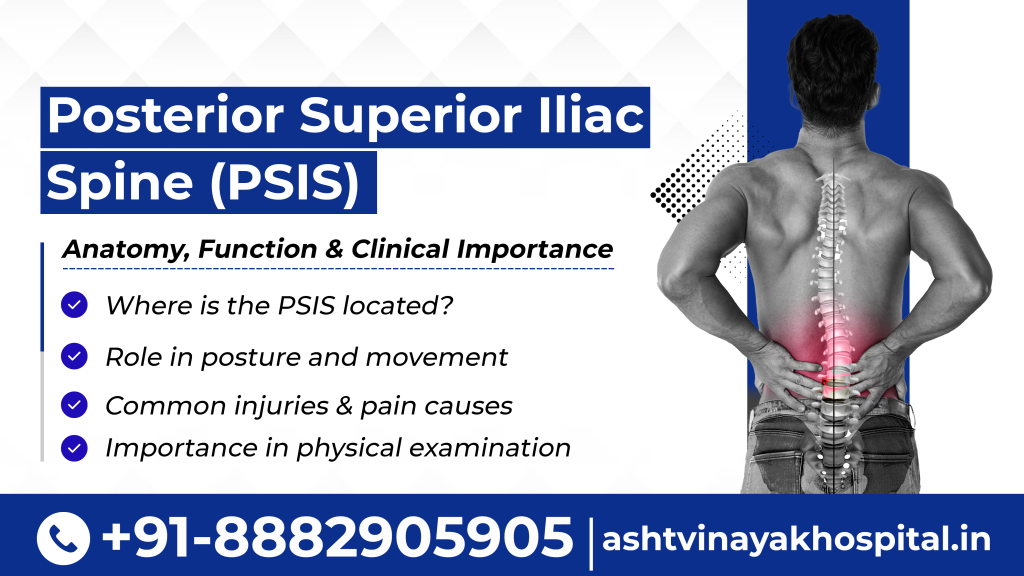
Posterior Superior Iliac Spine: Anatomy, Function, and Clinical Importance Book An Appointment The PSIS, or posterior superior iliac spine, is a small but important anatomical marker on the back of the pelvic bone. Despite the fact that it is frequently disregarded, it is an essential component in the alignment of the musculoskeletal system, clinical diagnostics, and even surgical procedures. In this blog, we will discuss everything you need to know about the PSIS, including its anatomy and function, as well as the problems that are connected with it and the treatment choices that are available. What is the Posterior Superior Iliac Spine? The top border of the ilium, the main bone of the pelvis, is formed by the bony protrusion known as the posterior superior iliac spine, which is located behind the iliac crest. When you position your hands on your hips and feel the dimples in your lower back, you are contacting the PSIS. These landmarks are not merely anatomical anomalies; they are essential for the assessment of pelvic symmetry and spinal alignment. This structure is an essential point of reference in both clinical and non-clinical environments. It aids in the identification of sacroiliac joint dysfunctions, pelvic tilts, and discrepancies in limb length. For physiotherapists, chiropractors, orthopedic physicians, and even yoga and pilates instructors, comprehension of the posterior superior iliac spine is particularly advantageous. The posterior superior iliac spine’s anatomy Location: The PSIS is located near the rear of the pelvic bone, and it is symmetrical on both sides of the sacrum. Landmark for Clinicians: It serves as a reference point for lumbar punctures and spinal anesthesia, making it an important landmark for clinicians. Related Structures: ASIS, which stands for anterior superior iliac spine, as well as the sacrum, iliac crest, and gluteal muscles are all related structures. It’s important to keep in mind that the sacroiliac joint, which joins the sacrum, the base of the spine, to the ilium, the pelvic bone, is situated right above the posterior superior iliac spine. It is because of this close proximity that the PSIS is frequently involved in conditions that affect the pelvis and the lower back area. The role that the PSIS plays The posterior superior iliac spine acts as a point of attachment for a number of key ligaments and muscles, including the following: Maintaining pelvic stability is aided by the posterior sacroiliac ligament.. At this point, the muscles are attached to portions of the thoracolumbar fascia and the gluteus maximus. Postural alignment is an important factor in ensuring that the pelvic tilt and spinal posture are maintained. The PSIS also contributes to the maintenance of a balance between the forces that are communicated between the spine and the lower extremities. Having bad posture, experiencing back discomfort, and having restricted mobility might be the result of any imbalance in the muscles or ligaments around the PSIS. What Patients Should Know About the Posterior Superior Iliac Spine Tool for Diagnostics Use as a key marker during physical tests to check pelvic alignment. Utilized for diagnostic procedures such as X-rays, CT scans, and MRIs. Symptoms Pain near the PSIS could mean that the sacroiliac joint isn’t working right, the pelvis is tilted, or muscles are strained. Often a cause of lower back pain, especially in sports or people who don’t stand up straight. Physical therapy or chiropractic adjustments can also be guided by the PSIS. Any unevenness in its height or position is usually a sign of a physical problem that needs to be fixed for treatment to work. Conditions related with the PSIS 1. Sacroiliac Joint Dysfunction Swelling or weakness in the SI joint. Symptoms: pain around the PSIS, stiffness, and pain that spreads to the legs. 2. The pelvic girdle Pain Often seen in pregnant women. experiencing soreness close to the PSIS. 3. Imbalances in Muscles Overuse of nearby muscles, like the gluteus or lower back. Is painful or uncomfortable all the time. 4. Difference in Leg Length When one leg is shorter than the other, the PSIS is not properly aligned. Can lead to compensatory movement habits that hurt. 5. Problems with the sciatic nerve Even though they are not closely linked, problems with the PSIS can sometimes look like sciatica symptoms because of the way muscles refer pain. Techniques for Diagnosis and Evaluation Palpation is the technique of evaluating pain and balance through touch. During motion analysis, functional testing involves looking at how the pelvis tilts. To rule out structural issues, get an MRI or CT scan. Measurement of Leg Length to find differences that could change the PSIS level. Posture Analysis to finds out how the hips, shoulders, and back are aligned with the PSIS. Options for Treatment Physiotherapy Adjustments to the pelvic position with exercise. Routines that focus on strengthening and stretching. Core stabilization programs. Manual Therapy Adjustments made by a chiropractor or osteopath physician. Included are deep tissue massage and myofascial release. Using muscle energy techniques (METs) to regain equilibrium. The Management of Pain NSAIDs or corticosteroid injections near the SI joint. For the treatment of inflammation, hot and cold therapy is used. Instruction in Postural Gait correction and ergonomic modifications are both included. Pilates and yoga help to improve the alignment of the spine. Surgical Intervention Rare, and will only be considered in cases of joint illness that is degenerative or caused by trauma. Sacroiliac joint fusion or ligament restoration may be required. Role of PSIS in Sports and Surgery Sports Injuries: Athletes frequently experience discomfort as a result of the repetitive tension that occurs around the PSIS. Biomechanical Analysis: Runners, dancers, and weightlifters use it to improve their efficiency. Medical Uses: Directs the insertion of iliosacral screws and serves as a bone graft donor location. Post-Surgical Rehabilitation: Focuses on restoring symmetry and preventing scar tissue buildup around the PSIS. Gender Differences in PSIS Anatomy and Pain Male and female posterior superior iliac spine structure and function may differ due to hormonal and anatomical variations. Women’s broader pelvis might impair PSIS alignment