
"Healthcare with Humane touch"

Ashtvinayak Helpline

Electrocardiogram vs Echocardiogram | Ashtvinayak Hospital

electrocardiogram vs echocardiogram

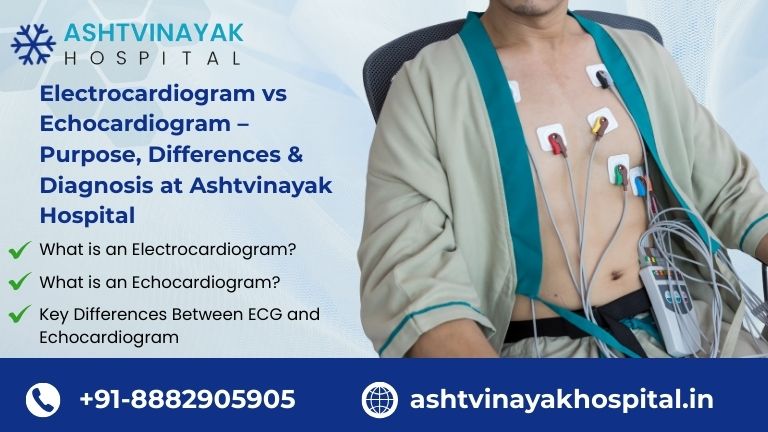
Electrocardiogram vs Echocardiogram – Purpose, Differences & Diagnosis at Ashtvinayak Hospital Book An Appointment Introduction The heart is one of the most important organs in our body. It works like a pump that pushes blood everywhere so that each part of the body gets oxygen and nutrients. Sometimes, the heart needs to be checked to make sure it is working properly. Doctors use different tests to study the heart, and two of the most common tests are the Electrocardiogram (ECG or EKG) and the Echocardiogram (ECHO). Many people get confused about electrocardiogram vs echocardiogram because their names sound similar, but they are actually very different. Each test checks different things about the heart and helps doctors understand how healthy the heart is. In this blog, we will explain the difference between ECG and Echocardiogram in a very simple way so everyone can understand. We will also discuss when you need these tests, how they work, and why Ashtvinayak Hospital is a trusted center for accurate heart testing. What is an Electrocardiogram? An Electrocardiogram (ECG or EKG) is a quick and painless test that measures the electrical signals in your heart. Every time your heart beats, it produces tiny electrical waves. An ECG records these waves and shows them as lines on a graph. Doctors use ECGs to check: If the heart beats too fast or too slow If there is an irregular heartbeat (arrhythmia) If there is any damage to the heart muscles If the patient has had a heart attack An ECG is usually one of the first tests done when someone has chest pain or difficulty breathing. How Does an Electrocardiogram Work? During an ECG: Small stickers called electrodes are placed on your chest, arms, and legs. Wires are connected from the electrodes to the ECG machine. The machine records the heart’s electrical activity and prints or displays the result. The test is: Completely safe Pain-free Takes only 5–10 minutes The ECG machine does not send electricity into the body; it only reads the signals your heart naturally produces. What is an Echocardiogram? An Echocardiogram (ECHO) is a test that uses ultrasound (sound waves) to create moving pictures of your heart. It shows the structure of the heart, how well blood flows, and how well the heart is pumping. Doctors use echocardiograms to check: Heart valve problems Heart muscle strength Heart shape and size Blood flow inside the heart Congenital heart defects (present from birth) Unlike ECG, which shows electrical activity, ECHO shows real-time images of the heart. How Does an Echocardiogram Work? During an ECHO test: A special gel is applied to your chest A handheld device called a transducer is moved over your chest The device sends ultrasound waves that create live images on a screen The test is: Safe and painless Takes about 20–30 minutes Uses no radiation, only sound waves It helps doctors see how well the heart is functioning. How Are the Tests Done? Electrocardiogram vs Echocardiogram Test Procedure Feature Electrocardiogram (ECG) Echocardiogram (ECHO) Time taken 5–10 minutes 20–30 minutes What it checks Electrical activity Heart structure & blood flow Tools used Electrodes and wires Ultrasound probe & gel Comfort level Very comfortable Comfortable Images No (graph only) Yes (real moving pictures) Both tests are safe, simple, and very important in diagnosing different heart problems. When Do You Need Them? You may need an ECG if you have: Chest pain or discomfort Dizziness or fainting Fast heartbeat or irregular heartbeat Weakness or fatigue You may need an Echocardiogram if you have: Breathing difficulty Swelling in feet or legs Heart murmurs or weak heart function Heart valve issues Persistent chest pain or pressure Doctors may advise both tests to get a complete picture of heart health. Key Differences Between ECG and Echocardiogram Main Difference Explained Simply Shows how the heart beats Shows how the heart looks and works Records heart’s electrical signals Shows movement, pumping, and blood flow Good for arrhythmia and heart attack detection Good for valve problems, pumping strength, heart shape Quick screening test Detailed diagnostic test So when comparing electrocardiogram vs echocardiogram, the ECG checks the rhythm, and the Echo checks the structure. Which Test is Better for Which Condition? Condition Best Recommended Test Irregular heartbeat ECG Heart attack ECG Heart valve problems ECHO Weak pumping or heart failure ECHO Emergency chest pain evaluation ECG first, then ECHO Congenital heart defects ECHO   Most heart patients need both tests for accurate diagnosis. Benefits of Early Heart Diagnosis Early diagnosis helps: Prevent heart attacks Treat problems before they become dangerous Improve quality of life Reduce hospital admissions Increase survival rates Testing early saves lives. Cost Comparison of Electrocardiogram vs Echocardiogram Test Approximate Cost in India Electrocardiogram (ECG) ₹300 – ₹800 Echocardiogram (ECHO) ₹1500 – ₹4000   At Ashtvinayak Hospital, we offer affordable pricing and quality care with expert cardiology specialists. Why Choose Ashtvinayak Hospital for Electrocardiogram vs Echocardiogram? What Makes Our Heart Care Trusted Highly experienced cardiologists and cardiac technicians Advanced ECG and 2D/3D Echocardiogram technology Accurate reporting and fast diagnosis Comfortable testing environment Affordable costs and transparent billing Emergency care & 24/7 cardiac support Personalized treatment and follow-up care We believe in early detection and precise heart care to protect your health. FAQs Which is more detailed, ECG or ECHOCARDIOGRAM? Echocardiogram is more detailed because it shows real images of the heart. Is ECG enough to diagnose heart problems? Sometimes yes, but many patients also need an ECHO for complete understanding. Are ECG and ECHO painful? No, both tests are completely safe and painless. How long do results take? Most ECG results are immediate; ECHO results may take a few hours depending on the report. Can ECG detect heart blockage? It may show signs, but an ECHO or angiography is needed for confirmation. Echocardiogram is more detailed because it shows real images of the heart. Sometimes yes, but many patients also need an ECHO for complete understanding. No, both tests are completely safe and painless. Most ECG results are immediate;

Ashtvinayak Hospital is the best superspeciality hospital in Panvel Navi Mumbai, offering expert care in cardiology, orthopedics, urology, and more. Your health is our priority!

© 2026 Martech Simplified . All Rights Reserved Ashtvinayak Hospital

Your Health, Our Priority