


Hernia Surgery: Types, Symptoms, Procedure and Recovery
- Ashtvinatak Hospital
- November 21, 2026
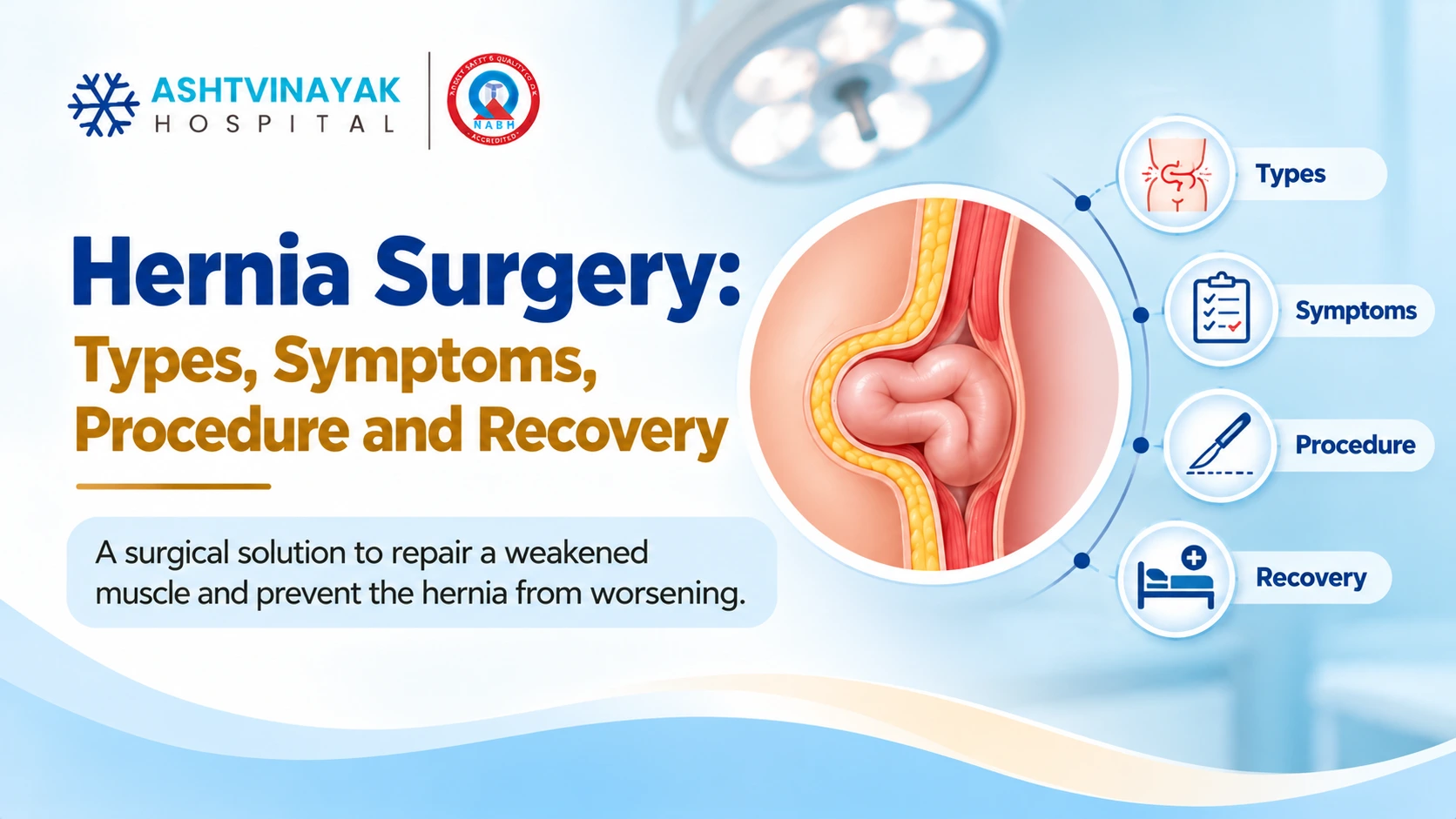

A hernia develops when an internal organ or tissue pushes through a weak area in the surrounding muscle or connective tissue. It commonly appears as a swelling in the abdomen or groin and may cause discomfort during coughing, lifting, or physical activity. While some hernias produce few symptoms, others may require surgical treatment to prevent or address complications.
At Ashtvinayak Hospital, Panvel, Navi Mumbai, general surgery services include the assessment and management of selected hernia conditions. Understanding the different types of hernias, available treatment options, surgical procedures, and recovery requirements can help patients make informed decisions with their healthcare team.
What Is a Hernia?
A hernia occurs when tissue moves through a weakened area in the muscle or connective tissue that normally holds it in place. Hernias can develop gradually or become noticeable after physical strain. However, lifting a heavy object is not the only cause; some weaknesses develop because of ageing, previous surgery, pregnancy, or other factors.
A hernia may become more noticeable while standing, coughing, or straining. The symptoms depend on its location, size, and whether surrounding tissue becomes trapped.
Not every hernia requires immediate surgery. The appropriate management depends on the type of hernia, symptoms, risk of complications, and the patient’s overall health.
Common Types of Hernias
Inguinal Hernia
An inguinal hernia develops in the groin when tissue protrudes through a weak area in the lower abdominal wall. It is one of the most common types of hernia and may cause a visible bulge, discomfort, or a dragging sensation. Symptoms can become more noticeable while standing, coughing, or lifting.
Umbilical Hernia
An umbilical hernia develops near the navel when tissue pushes through a weak area around the belly button. It can occur in children and adults. In adults, the swelling may become more noticeable during activities that increase pressure inside the abdomen.
Incisional Hernia
An incisional hernia occurs at or near the site of a previous abdominal operation. It develops when the tissues in the surgical area do not maintain sufficient strength. Factors such as wound complications, obesity, and increased abdominal pressure may contribute to its development.
Femoral Hernia
A femoral hernia occurs when tissue protrudes through the femoral canal near the upper thigh and groin. It may be less noticeable than an inguinal hernia but has a relatively higher risk of complications involving trapped tissue. Prompt medical assessment is important when this type of hernia is suspected.
What Are the Symptoms of a Hernia?
Hernia symptoms vary according to the location and severity of the condition. Some people notice a swelling without significant pain, while others experience discomfort during daily activities.
Common signs and symptoms include:
- A visible or palpable bulge in the abdomen, groin, or near the navel.
- Discomfort or pain while coughing, bending, or lifting.
- A feeling of pressure or heaviness in the affected area.
- Swelling that becomes more noticeable when standing.
- Discomfort that improves when lying down in some cases.
A hernia may also cause no obvious symptoms during its early stages. A medical examination can help determine whether a swelling is a hernia or another condition.
When is urgent medical attention necessary?
Sudden or severe pain, a firm swelling that cannot be pushed back, skin discolouration over the bulge, vomiting, or abdominal distension may indicate a serious complication. These symptoms require emergency assessment because the blood supply to trapped tissue may be affected.
Consult a qualified surgeon for timely hernia evaluation and appropriate treatment guidance.
What Causes a Hernia?
Hernias usually develop when a weak area in the abdominal wall allows tissue to protrude. Several factors may contribute to this process.
These include age-related weakening of muscles, previous abdominal surgery, pregnancy, obesity, chronic coughing, persistent constipation, and repeated straining. Some people may also have an underlying weakness in the abdominal wall.
Heavy lifting can make an existing hernia more noticeable or aggravate symptoms, but it is not the sole cause of every hernia. Identifying contributing factors may help guide management and advice about physical activity.
How Is a Hernia Diagnosed?
Diagnosis generally begins with a medical history and physical examination. The healthcare professional may ask when the swelling appeared, whether it changes with activity, and whether pain or other symptoms are present.
During the examination, the affected area may be assessed while the patient stands, coughs, or changes position. These observations can help identify a possible hernia.
Imaging tests, such as ultrasound or CT scans, may be recommended when the diagnosis is uncertain, the hernia is difficult to examine, or additional information is required for treatment planning.
The need for surgery is determined after considering the examination findings, type of hernia, symptoms, and potential risks of complications.
What Are the Different Types of Hernia Surgery?
Hernia repair aims to return protruding tissue to its appropriate position and address the weakness in the abdominal wall. The choice of procedure depends on the hernia’s location, size, previous repair history, and the patient’s medical condition.
Open Hernia Repair
Open hernia repair involves an incision over the affected area. The surgeon returns the protruding tissue to its appropriate position and repairs the weakened area. Surgical mesh may be used in selected cases to reinforce the abdominal wall.
This approach may be suitable for different types of hernias, depending on the clinical findings.
Laparoscopic Hernia Repair
Laparoscopic hernia repair uses a camera and specialised instruments inserted through small incisions. The procedure allows the surgical team to repair the hernia without making a larger incision directly over the affected area.
For suitable patients, this approach may offer smaller incisions and a different recovery experience compared with open surgery. However, it is not appropriate for every hernia, and all surgical techniques carry potential risks.
Hernia Repair Using Surgical Mesh
Surgical mesh is used in selected hernia repairs to reinforce weakened tissue and support the repair. Whether mesh is appropriate depends on the type of hernia, the surgical technique, and individual clinical considerations.
The treating team should discuss the proposed method, possible complications, and available alternatives before planned surgery.
How to Prepare for Hernia Surgery
Preparation depends on the type of operation, anaesthesia, and the patient’s medical history.
Before planned surgery, patients should share information about existing health conditions, allergies, previous operations, and medicines or supplements they take. Certain medicines may need adjustment, but changes should only be made on medical advice.
Fasting instructions should be followed when required. Recommended investigations and preoperative assessments should also be completed as advised.
Patients should clarify the expected hospital stay, wound care, restrictions on lifting, and follow-up arrangements before the procedure whenever possible.
Recovery After Hernia Surgery
Recovery varies according to the hernia, the surgical technique, the patient’s health, and whether complications occur.
Pain and Wound Care
Some discomfort around the surgical site is expected after an operation. Medication may be prescribed to manage pain. Patients should follow the instructions provided and report severe or worsening pain.
The wound should be cared for according to the hospital’s advice. Increasing redness, swelling, discharge, wound separation, or fever should be reported promptly.
Movement and Physical Activity
Gentle movement may be encouraged during recovery when appropriate. Heavy lifting, strenuous exercise, and certain work activities may need to be restricted temporarily.
The time required to resume normal activities varies between patients. Instructions should be based on the specific procedure and the progress of healing.
Preventing Further Strain
Depending on the patient’s condition, maintaining a healthy weight, managing persistent constipation, and addressing chronic coughing may help reduce repeated strain on the abdominal wall.
These measures do not guarantee that a hernia will be prevented or that a repaired hernia will not recur. Individual advice should be obtained from the treating healthcare team.
Possible Risks of Hernia Surgery
Potential complications include bleeding, infection, blood clots, reactions to anaesthesia, persistent pain, and recurrence of the hernia. Other risks depend on the location of the hernia and the procedure performed.
The relevant risks, expected benefits, and available alternatives should be discussed before planned surgery. The choice between open and laparoscopic repair should be based on clinical suitability rather than the assumption that one method is always better.
Hernia Assessment at Ashtvinayak Hospital, Panvel
Ashtvinayak Hospital in Panvel, Navi Mumbai, provides general surgery services that include the assessment and management of selected hernia conditions. Evaluation may involve reviewing symptoms, conducting a physical examination, arranging investigations when indicated, and considering appropriate treatment options.
Information about the hospital’s listed surgical services is available on the General Surgery Department page.
Conclusion
Hernias develop when tissue pushes through a weakened area in the surrounding muscle or connective tissue. Their symptoms and treatment requirements vary according to the location, severity, and risk of complications.
Understanding the available surgical approaches, diagnostic process, and recovery requirements can help patients participate in informed treatment decisions. Sudden severe pain or a painful, firm hernia swelling requires urgent medical assessment.
Ashtvinayak Hospital’s General Surgery Department in Panvel, Navi Mumbai, provides information about its listed surgical services through the hospital website. The appropriate management of a hernia should be determined following an individual clinical assessment.
Frequently Asked Questions About General Surgery
Can a hernia disappear without surgery?
An established hernia in an adult generally does not close on its own. Some hernias may be monitored under medical supervision, while others require repair. Management depends on the type, symptoms, and risk of complications.
Is hernia surgery always necessary?
No. The need for surgery depends on the hernia’s characteristics, symptoms, and the possibility of complications. A clinical assessment helps determine the appropriate approach.
How long does recovery take after hernia surgery?
Recovery depends on the procedure, the patient’s health, and the nature of the hernia. The time required to return to work, exercise, and lifting activities should be determined according to individual recovery and medical advice.
Can a hernia return after surgery?
Yes. Hernia recurrence is possible after repair. The likelihood depends on several factors, including the type of hernia, the repair performed, tissue healing, and individual health factors.